20 Books to Pretend to Have Read Over the Summer

Seem as smart as you feel.

People name drop all the time, but there's nothing quite so I'm-a-very-bright-boy-yes-I-am like name dropping books. Below are the names of 20 books that will make you seem bright as a button, along with some brief talking points so you don't have to spend any time at all cracking them open. Knowledge is power!

1. INFINITE JEST by David Foster Wallace

Giphy

DFW's magnum opus is well-paved comedic territory for a reason: pretty much any young dude that considers himself gifted displays this 1000+ page brick of a book prominently on his bedside table. Maybe he's even roughed it up a bit to make it seem like he's opened it. It's about Boston, tennis, footnotes, and substance-managed clinical depression. Pretending to have read Infinite Jest suggests that you too are in the small circle of people in the know about the elaborate rituals of the elite, like brand name schools and the verb form of "summer." If you mention that you've read Infinite Jest in front of anyone who has actually read Infinite Jest, you're unlikely to get a word in edgewise for at least the next half-hour, so easy-peezy, tennis-ball-squeezy. 

2. MOBY DICK by Herman Melville

Giphy

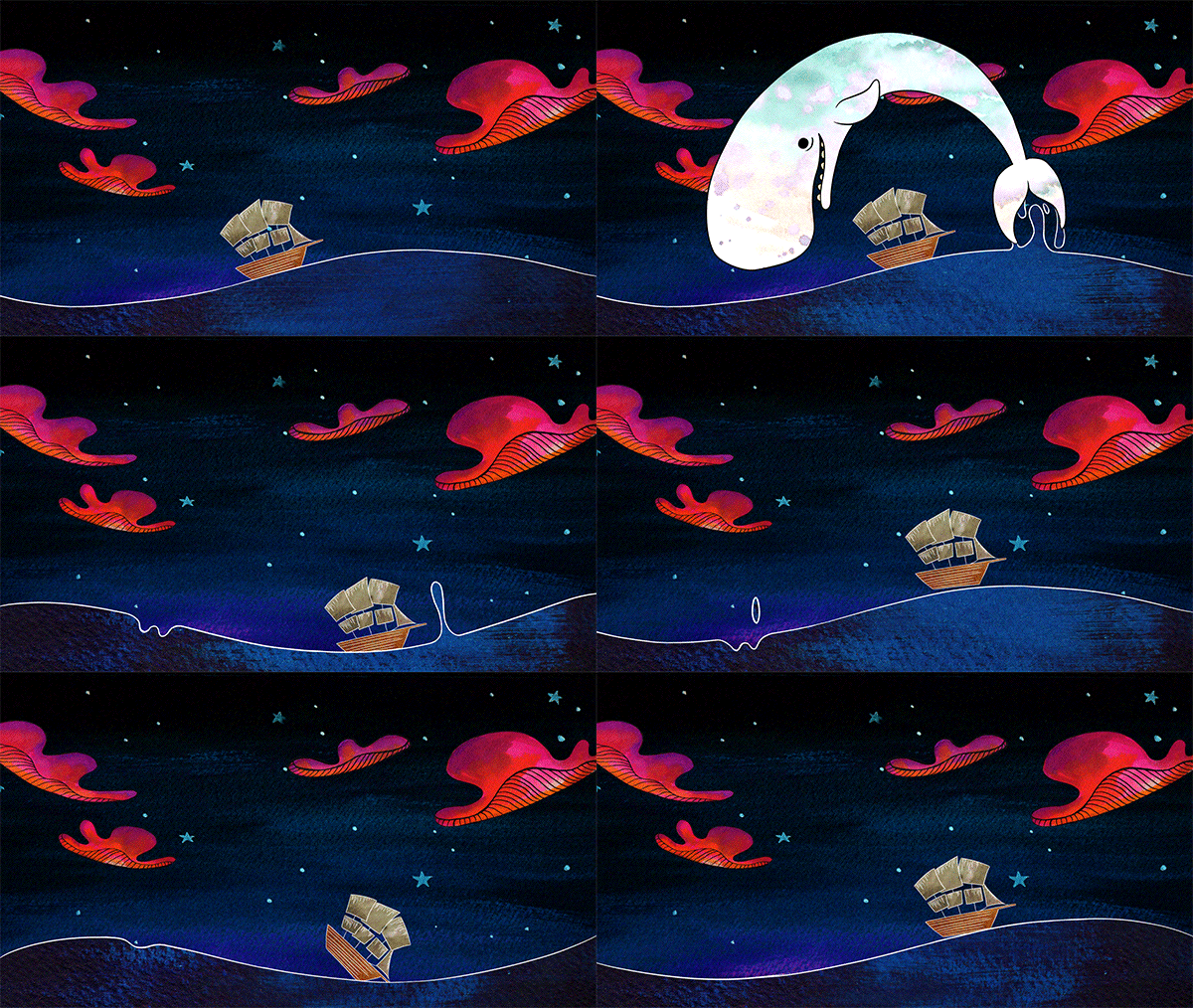
Moby Dick is about a man who doesn't like hats or albino marine life and it features the word sperm prominently -- so it's American literature in a nutshell. Keys to faking prior knowledge of Moby Dick are all about saying how funny it is beyond all the passages involving sperm. 

“Squeeze! Squeeze! Squeeze! all the morning long; I squeezed that sperm till I myself almost melted into it; I squeezed that sperm till a strange sort of insanity came over me, and I found myself unwittingly squeezing my co-labourers' hands in it, mistaking their hands for the gentle globules. Such an abounding, affectionate, friendly, loving feeling did this avocation beget; that at last I was continually squeezing their hands, and looking up into their eyes sentimentally, as much as to say,—Oh! my dear fellow beings, why should we longer cherish any social acerbities, or know the slightest ill humour or envy! Come; let us squeeze hands all round; nay, let us all squeeze ourselves into each other; let us squeeze ourselves universally into the very milk and sperm of kindness.”

― Herman Melville, Moby-Dick or, The Whale


3. LOLITA by Vladmir Nabokov

Tumblr

If you just keep pushing a line about how beautiful the language is and how casual lepidopterology should be a larger part of the culture, you won't have to address the actual subject matter of the book at all

4. MIDDLEMARCH by George Eliot

Giphy

Regrettably knowing that George Eliot was a woman is not quite enough to carry an entire conversation, but fear not -- faking your way through a mention of Middlemarch is all about talking about other books. Don't mention the TV series's usage of Rufus Sewell in his prime. It's smart to read books that involve TV (see: Infinite Jest); it's not smart to watch TV about books. Instead, go for three name drops for the price of one: say that George Eliot's vignettes of married life meet Mark Twain's criticism of Jane Austen's work as classist and shallow.  

5. WAR AND PEACE by Leo Tolstoy

Giphy

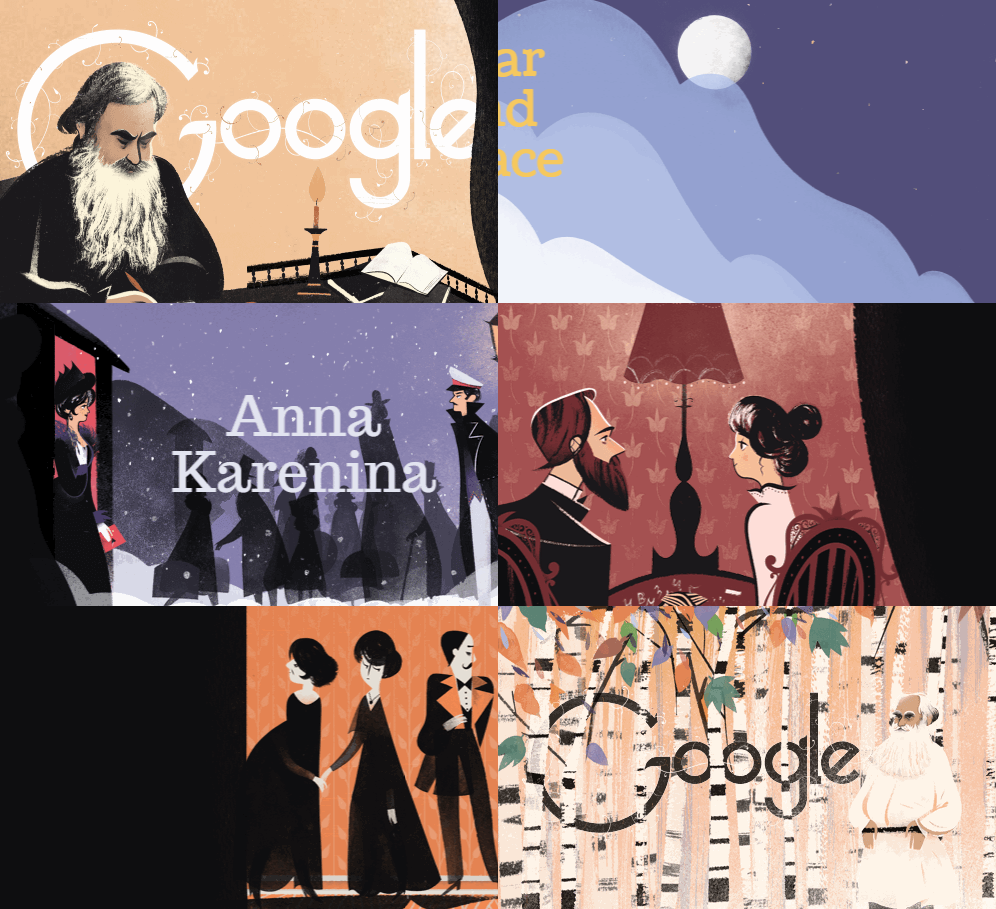
According to Woody Allen, it involves Russia. That's pretty much all you need to know. Divert questions about the text itself by asking about preferred translators and alluding to the controversy about Constance Garnett's version. 

6. ULYSSES by James Joyce

Giphy

Usually nestled next to Infinite Jest and likely just as dusty. If the content of the book comes up, try to find some natural way to include the last words ("and yes I said yes I will Yes"), prompting the assumption that you've read the preceding 265,000 words.

7. CATCH-22 by Joseph Heller

Saturday Morning Breakfast Cereal

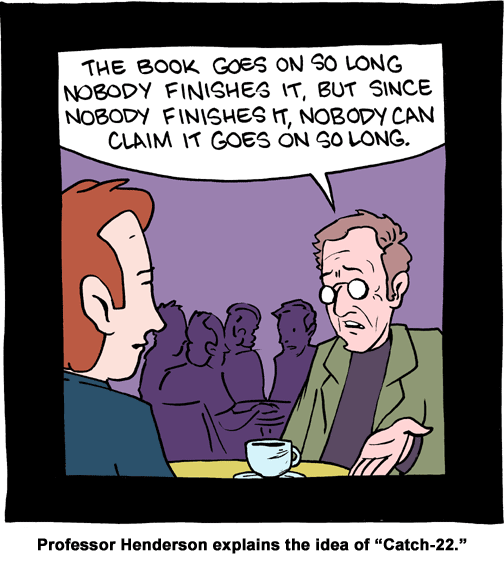
The trick with Catch-22 I've found is that the military protocol in the title describes a particular logical dilemma that I haven't bothered to fully understand, and if you say something is a catch-22 when it is merely a paradox or some other logical dilemma, someone invariably points this out. The path of least resistance is to never call anything a Catch-22 or allude to having read it. Is this a Catch-22? I'll never know.

8. LOVE IN THE TIME OF CHOLERA by Gabriel García Márquez

Flavorwire

I hope it is clear by now that the tenor of this list is making fun of a particular canon of what you should have already read by now, often featuring authors of particular time periods with particular features (whiteness, male-ness, high-class-ness). 

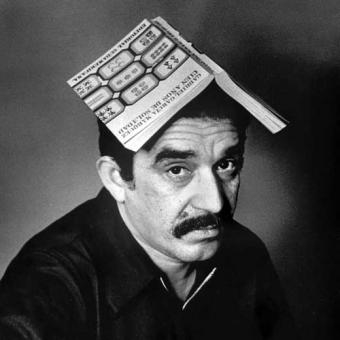
Márquez shares few of these features (he's male I guess), but his work is often employed as a kind of gate-keeping. Say you use the words magical realism about a contemporary American novel not by Toni Morrison -- you're likely to get a rapid rebuke that magical realism belongs to a particular literature by Latin American authors within a particular time period, with an allusion to Márquez's work. If you want to pull that, make sure you don't go for the obvious One Hundred Years of Solitude references; just talk about the subtle magical realism of fast growing rose bushes. 

9. THE WAVES by Virginia Woolf

Giphy

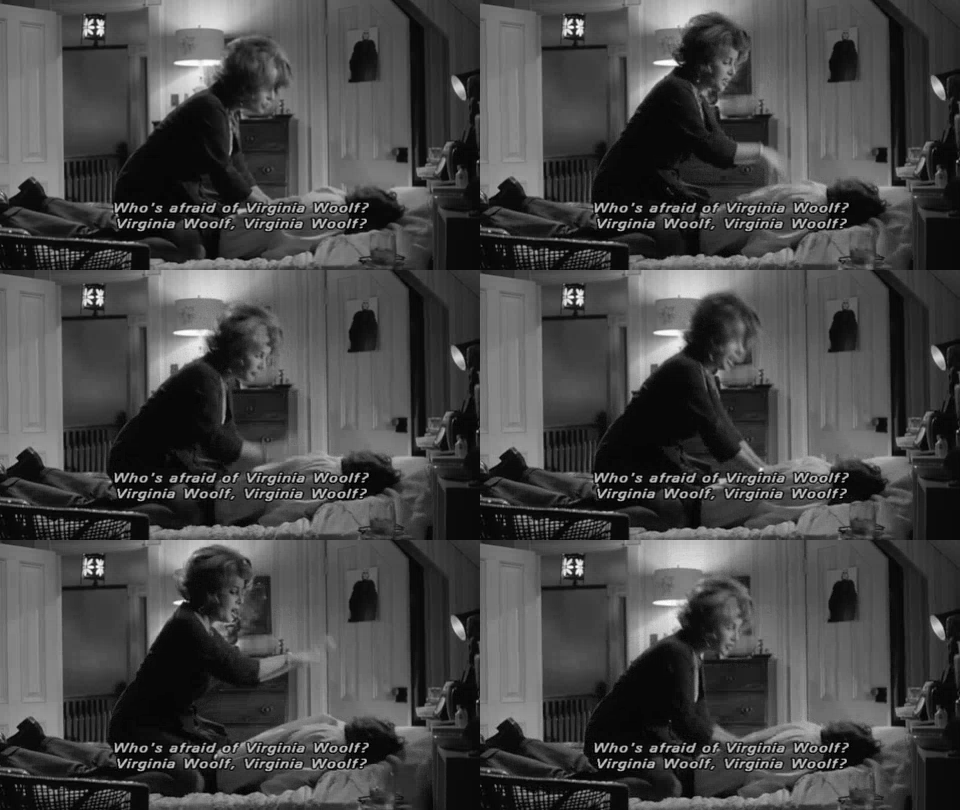
Mrs. Dalloway? That novela? 

Bring the cred with The Waves, the 'waves' in question being the voices of a group of childhood friends that narrate their perspectives one after another. Like Márquez, your moment is one of one-ups-man-ship. If someone points out that Mrs. Dalloway demonstrates an understanding of women being defined through others and so having necessarily refracted identities, point out how the The Waves takes this theme to its natural conclusion, calling attention the idea that some of the refracted identities of women are actually men. Niiice. 

10. GRAVITY'S RAINBOW by Thomas Pynchon

Giphy

It begins with some people eating bananas? Wikipedia states that it  "transgresses boundaries between high and low culture, between literary propriety and profanity, and between science and speculative metaphysics." Say that. Avoid followup questions by changing the subject to either rainbows or Sir Isaac Newton.

11. FICCIONES by Jorge Luis Borges

Giphy

For a crowd pleaser, when it comes up, say you're trying to pull a Pierre Menard and be the author of the Ficciones. It's meta, which makes Borges-y, which makes you kind of like the author of the Ficciones. You genius.

12. THE SOUND AND THE FURY by William Faulkner

Twitter

If something involves a disjointed narration of objectively terrible circumstances, particularly in rural America, pipe up about how Faulknerian it is. 

13. THE BROTHERS KARAMAZOV by Fyodor Dostoyevsky

Giphy

Casually mention that you still think about what Jesus kissing the Grand Inquisitor meant regarding human free will in Ivan's parable. For bonus points, feel free to read up on some interesting fan fiction interpretations.

14. DAS KAPITAL by Karl Marx

Giphy

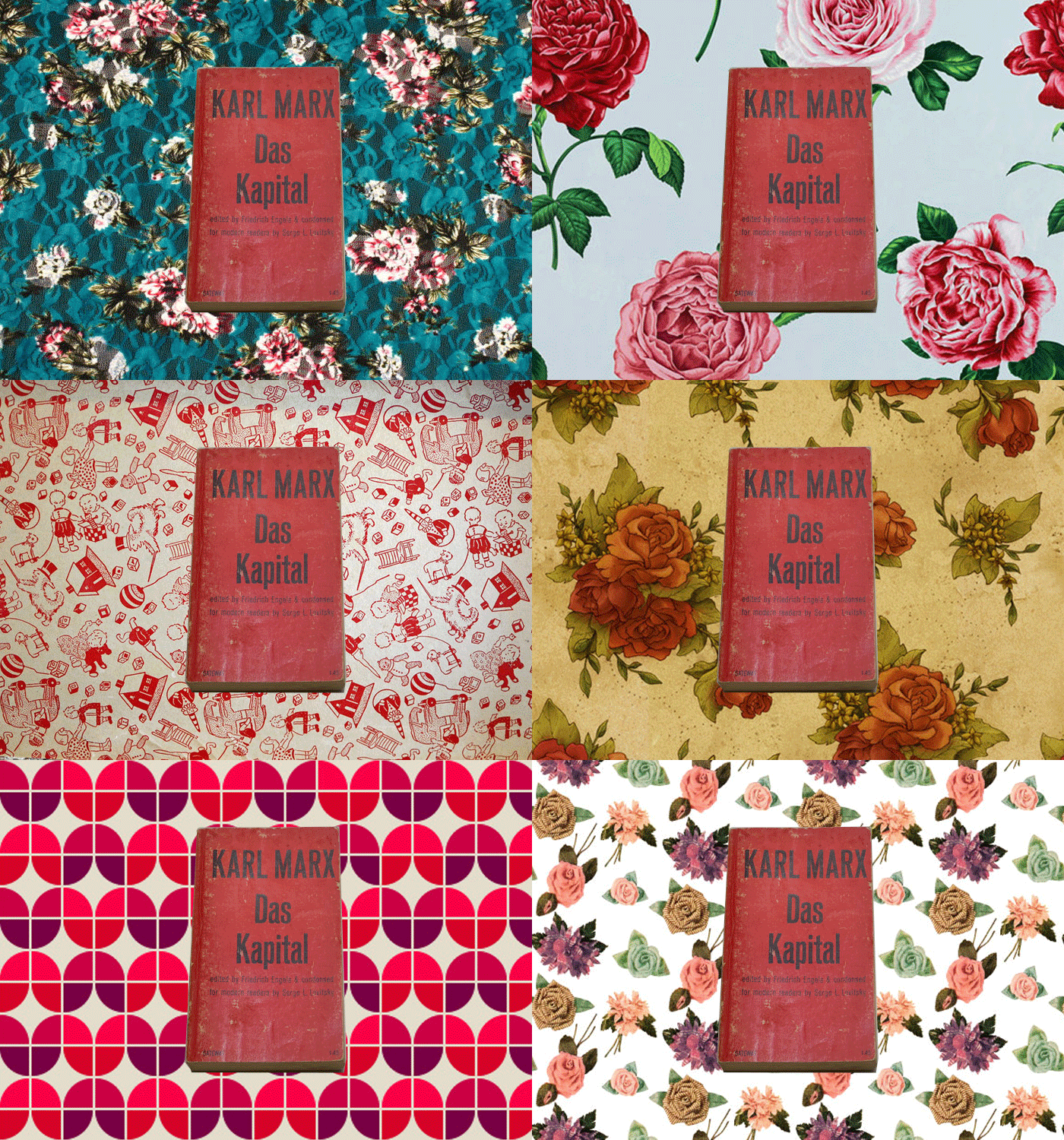
What most people don't realize is that Das Kapital is an extremely dry economics tome, with very little ideology mixed in. Say that, and your companion will agree das very interesting. 

15. THE SUN ALSO RISES by Ernest Hemingway

Giphy

I think this is the one about an impotent soldier in love with a Spanish woman, so go full bathos. 

"The sun also rises, but you know what doesn't?"

Just kidding, ladiiiiies. 

16. FAHRENHEIT 451 by Ray Bradbury

Giphy

It's about burning books, and that we shouldn't, I assume. Everyone read this in high school (except meeee), so pretending to read it involves nothing except never saying you haven't. Discretion is the better part of virtue and all that. If anyone tries to tie you up in a line of questioning about the plot of Fahrenheit 451, just mention Nazis.

17. ATLAS SHRUGGED by Ayn Rand

Giphy

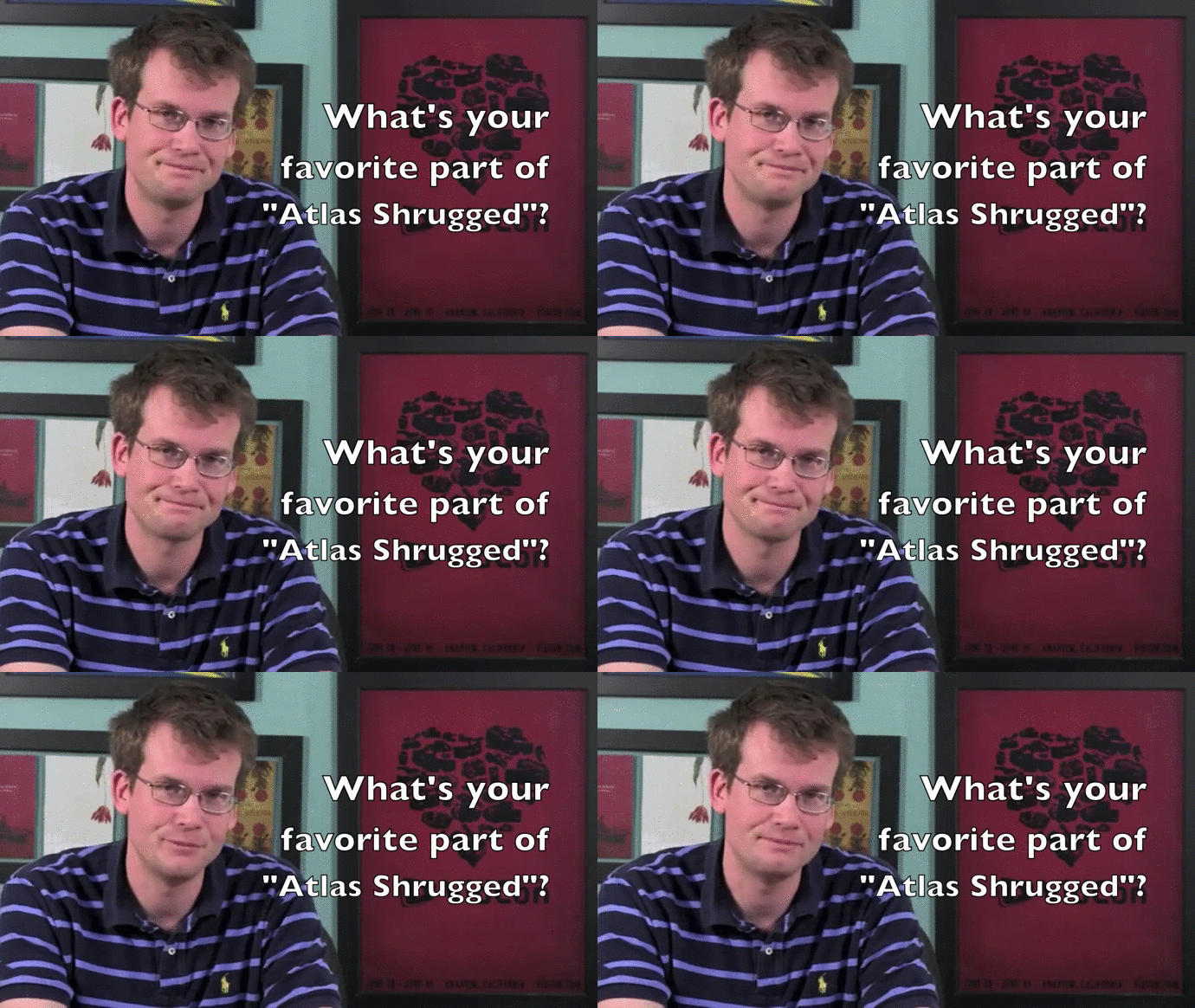
I kept waiting for it to stop being about trains. Spoiler: it doesn't. The go-to strategy with Rand is to allude to how awkward and ambiguously consensual the sex scenes are, particularly as her works are inspired by the morality tales of Victor Hugo's work: if you want this and do that to get it, here is the result. Yikes. 

19. NAUSEA by Jean-Paul Sartre

Giphy

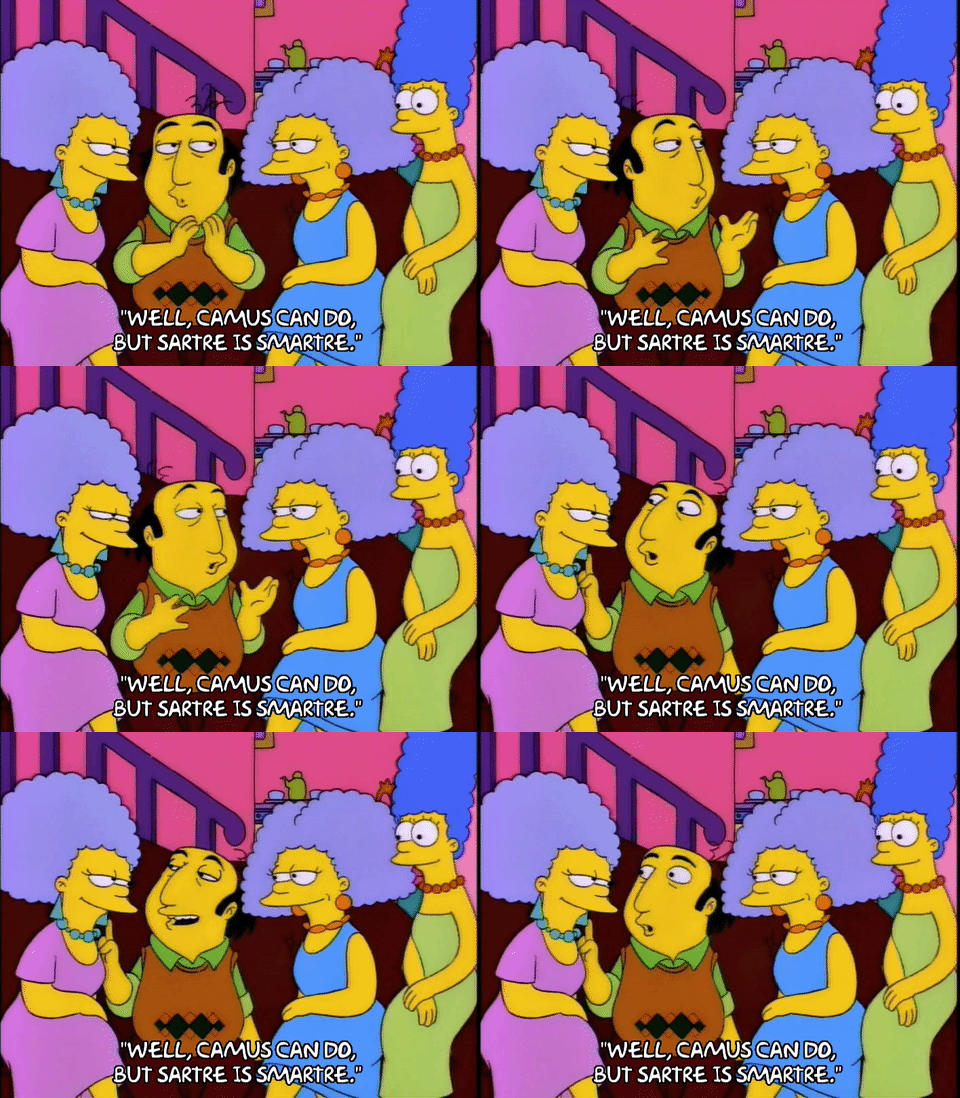
The key thing to say about all existentialist fiction is that if its hope was to impress existentialist philosophy -- which asks us to confront our complete freedom in all circumstances, even when faced with previously encountered circumstance -- then you've employed your complete freedom to never read it again. Plus, play them off of one another with a free rhyme from the Simpsons.

20. IF ON A WINTER'S NIGHT A TRAVELER by Italo Calvino

Giphy

If On A Winter's Night A Traveler describes a male reader and a woman in unrelated episodes told one after the other, asking what continuity a single reader brings to a work; bring this up when criticizing the plot of some other work, suggesting that the episodes of that work are as interrelated as Calvino's If On A Winter's Night A Traveler. Knowing nods all around. 

But there is an important point that Calvino makes in a separate work, Why Read the Classics?, that I hope is seeded here: what we consider the classics often come from a dubious aggregate authority from other people. Part of life, and reading, is arriving at your own set of classics, the works you consider vital to understanding your life. 

So don't just pretend to read, please. Read. And when some button-up Ray Ban intellectual in Merrell shoes asks you if you've read Infinite Jest, feel free to say that nah, you haven't, because your life is finite. And respond with what you do consider classic. 
Debug Dialog

Select an Ad Reference Layout

All available slots shows every ad slot in the current pages template, regardless of current ad setup. Enabled ad slots overwrites ads in current setup with debugging panels with any dimensions specified in the config. Overlay places a small overlay over each enabled ad slot with the slot name. When clicked, it expands to show more info about the ad slot.

Toggle Prebid Debugging Options

Toggle DFP Debugging Options

Set UTM Parameters

Override Session State